

pop-up power
why the best brand moments are small, sensory and temporary

From Dishoom’s makers’ markets to Merci’s recent concept with artist Shia McShia (I’m obsessed with the joyful illustrations), the most interesting retail moments aren’t happening in big retail flagships. They’re happening in compact, cool, deeply textured spaces designed to be felt — little brand worlds you step inside for five minutes and remember for five months.
High-impact, low-permanence.
Toast’s festive market in Shoreditch. Our Place at Merci. Aesop’s multi-sensory scent pop-up. Fishwife’s jewel-box tinscape. Damson Madder inside Selfridges, translating their slow-living campaign into a now permanent corner of the store. Pop-ups are becoming cultural punctuation marks — tiny interruptions that pull you off the street and into a brand’s world.
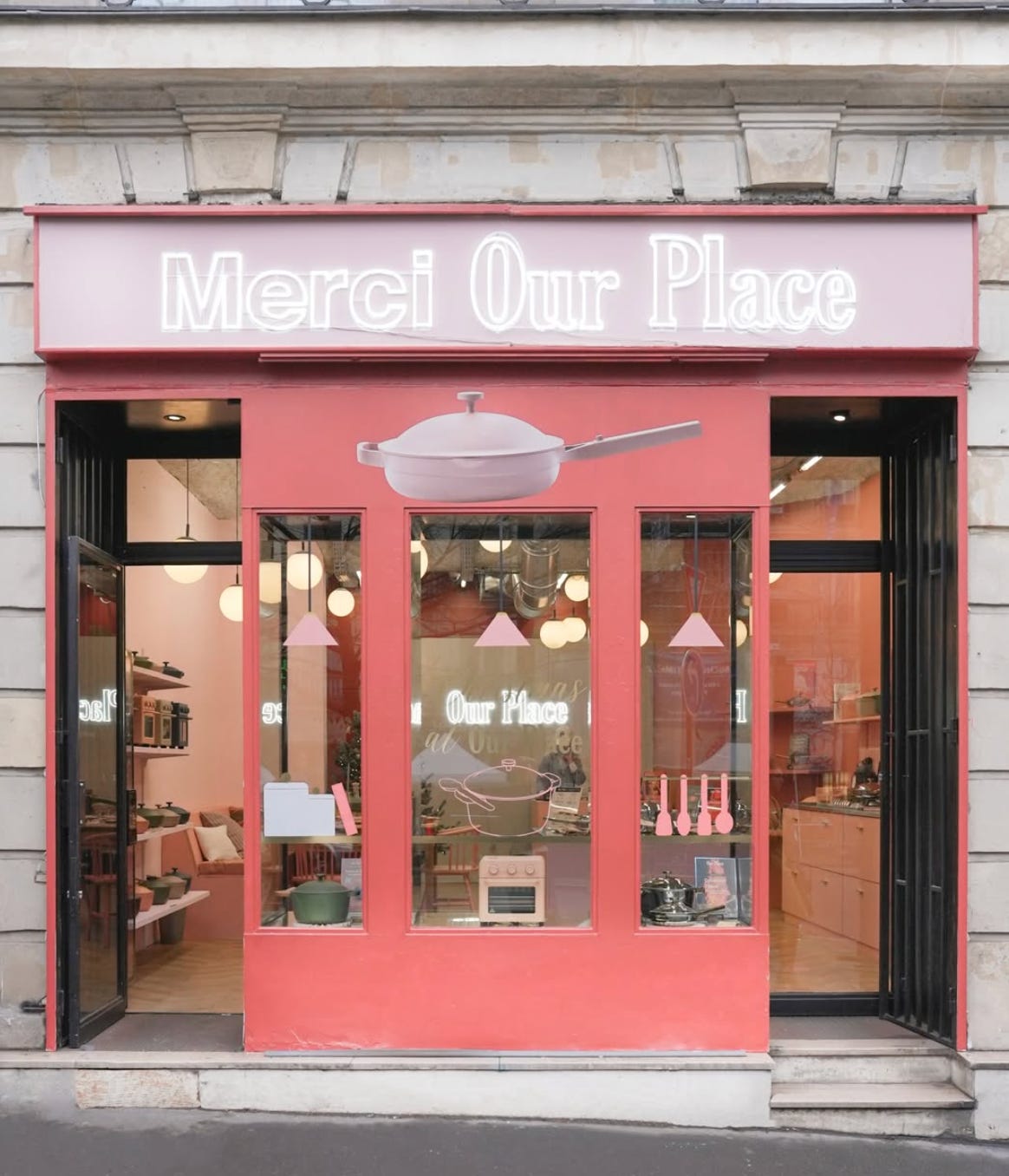
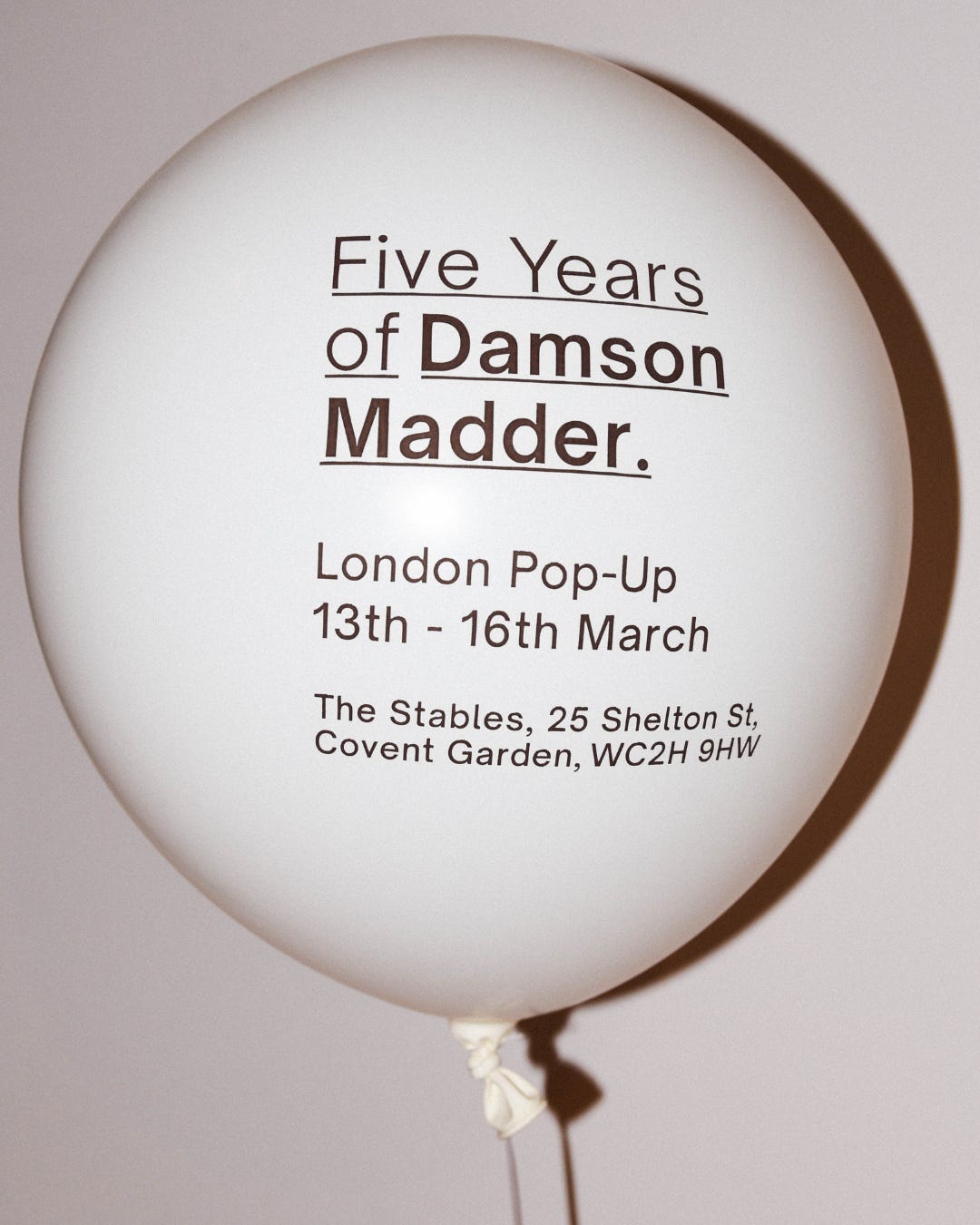
Image: Our Places IG, Country & Townhouse
And this week, I’m thinking about them more than usual because one I worked on has just opened: the Papier Festive Pop-Up at Shreeji in London. A small space full of paper, coffee, colour and stripes by Colours of Arley. A place to linger. To journal, do a crossword, talk to a friend. To browse. To have a moment.
So here’s why pop-ups work so well — and what I learnt from bringing one to life.
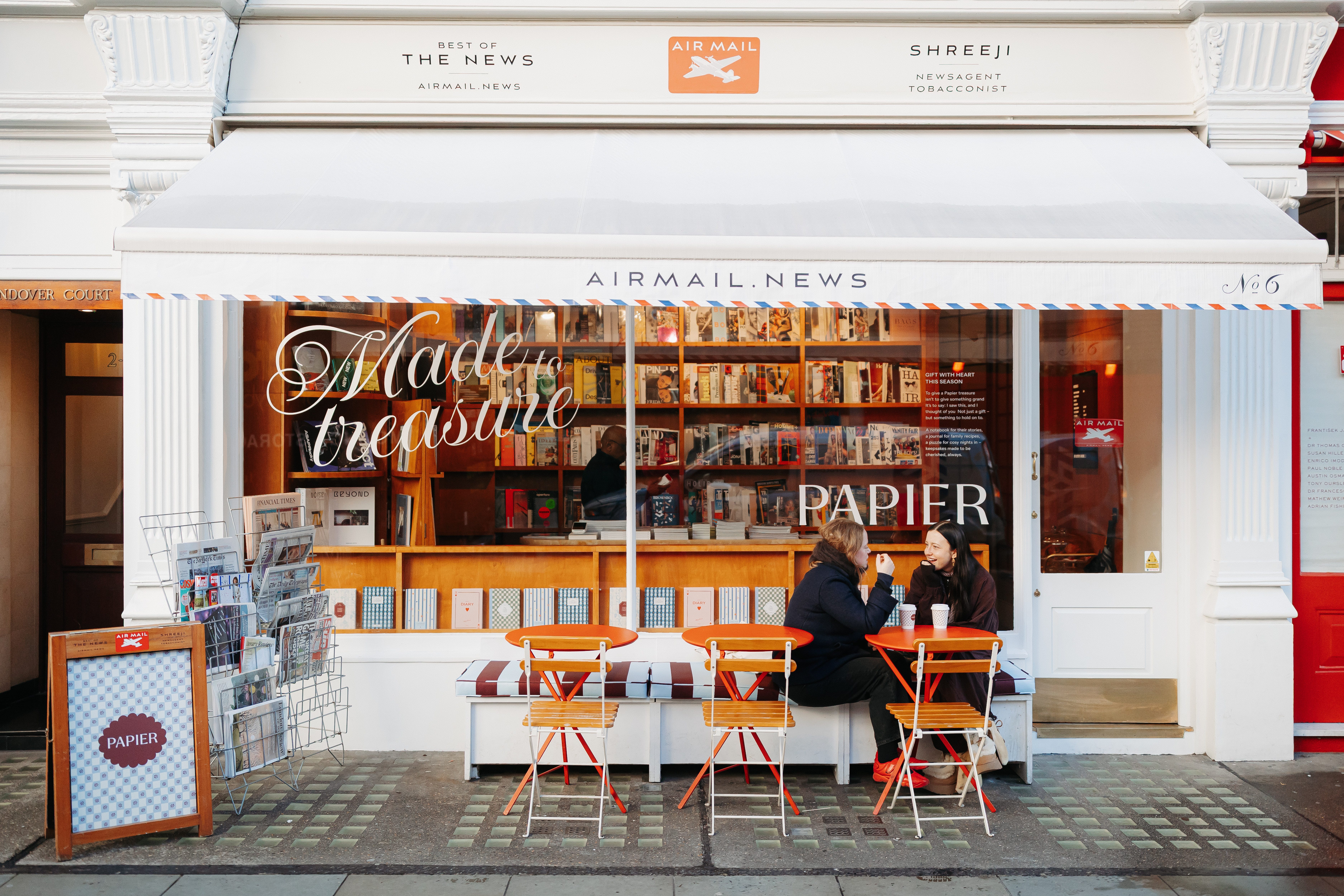
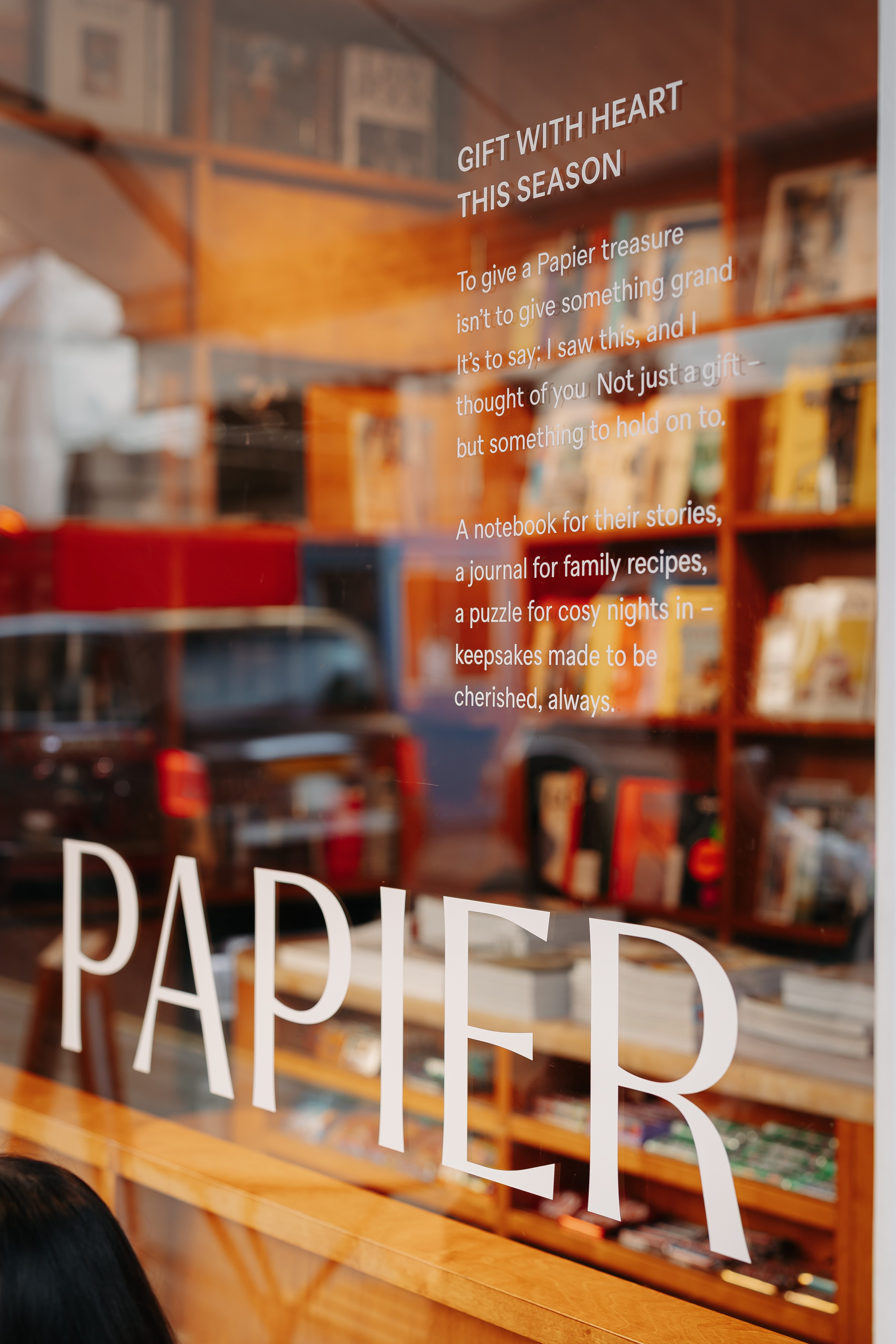
Image: Photography by Bizzy Arnott
Why Pop-Ups Work (and why they’re everywhere again)
Pop-ups are everywhere again because the cultural mood has shifted: consumers want tactility, smallness and IRL connection after years of algorithmic sameness. At the same time, brands want high-impact moments without the commitment or cost of permanent retail. Pop-ups sit neatly at the intersection of both desires.
1. They cultivate community and offline touchpoints
A good pop-up feels more like a clubhouse than a shop. People slow down, bring a friend, stay for a coffee. This ladders into a macro trend I’m always talking about: analogue experiences and real-life connection.
2. They’re part of brand world-building
Experiential isn’t about gimmicks. The best concepts translate your brand identity into something people can see, smell, touch and photograph — and crucially, understand.
As Keziah from Heaps + Stacks told me:
“This year has seen more pop-ups than ever before for our team - which we love. We have also seen a big rise in merch alongside these pop ups so you can become part of the club and signify your fandom!”
Pop-ups as cool brand membership badges - I love this.
3. They’re perfect for launches and storytelling
Pop-ups give shape to a moment. A collection. A theme. A reason to gather. They anchor press and partners while creating urgency for customers to show up now, not “at some point”. I love the Refy hotel that launched this Summer as a great example of using seasonality to bring people together.
4. They’re press-worthy by design
Editors love specificity. A one-week-only space with intention is infinitely more pitchable than “we opened a store”. Thoughtful visuals travel far, and you also get the chance to appear in “What’s On This Week” city guides - an underrated brand discovery tool.
5. They let you test without committing to retail
Not every pop-up needs to lead to a store, but it can. They’re a way to listen: what do people pick up, who walks in, how do they behave? It’s brand research wrapped in warm drinks and good lighting.
They also help you test neighbourhood fit and appetite — invaluable if retail is on your roadmap.
Behind the Scenes: Building the Papier Festive Pop-Up
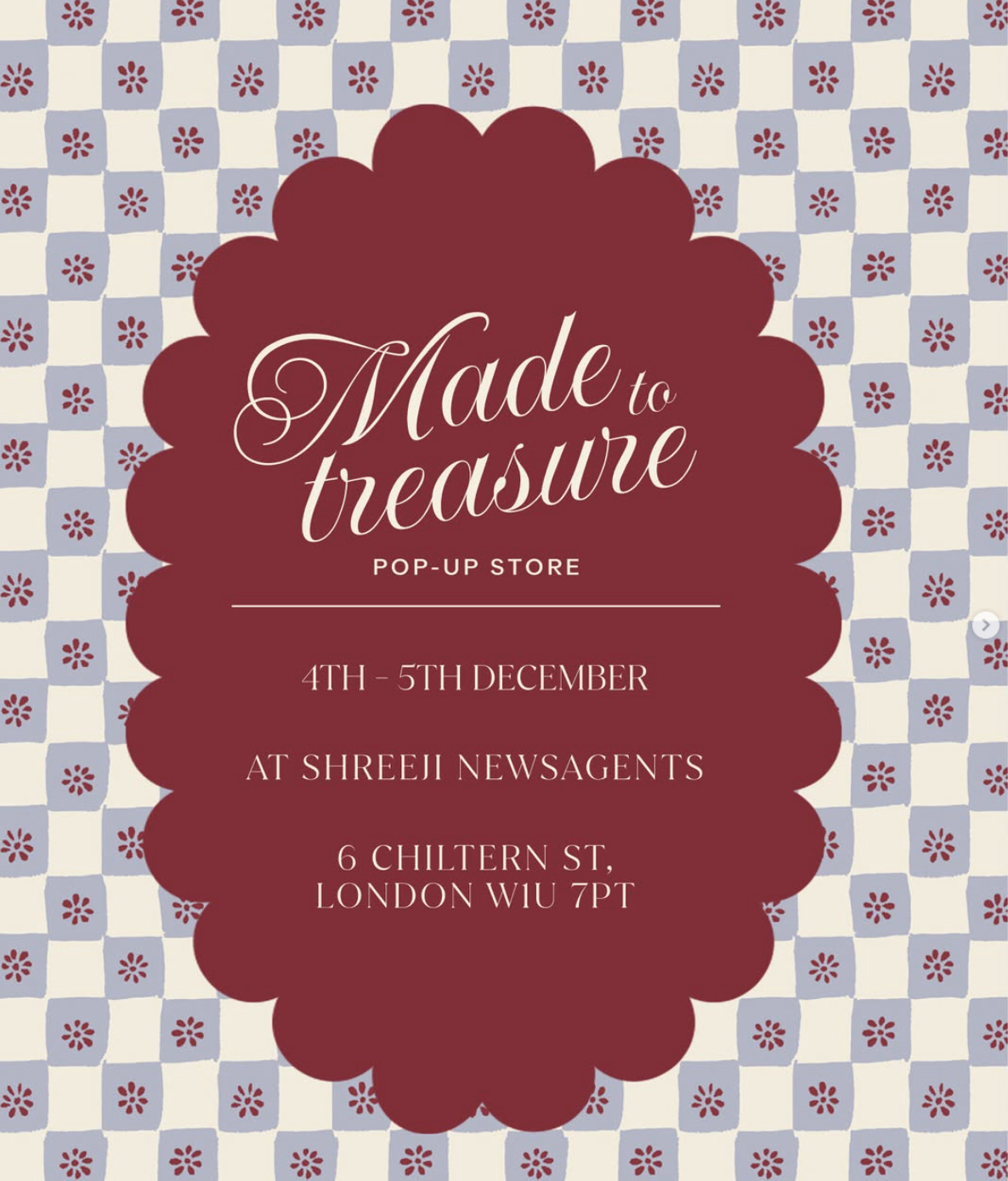
As mentioned, today marks day one of the Papier Festive Pop-Up at Shreeji Newsagents in Marylebone.
We’ve turned our favourite newsagent into the world of Papier: our Tesoro collection on the shelves, dressed in stripes from our brand friends at Colours of Arley that mirror the palette in the space. It’s designed for small, offline moments – coffee, journals, cards, puzzles – the kind of quiet analogue rituals Papier is really about.
Come by with friends to shop, sip, play and craft ✂️☕️🃏 Browse thoughtful Papier gifts, play cards over coffee or unwind in the puzzle lounge. There’s a full schedule of workshops and events too, hosted by some of our “paper people” and friends of the brand.
Before I get into the details, I should say: I’ve been a small piece of the puzzle here, working from Sydney. The team in London are some of the most creative, thoughtful people I know — I’m so proud of the work we get to do together.
What I’ve learnt from doing pop-ups (including this one)
1. Story first: location + theme
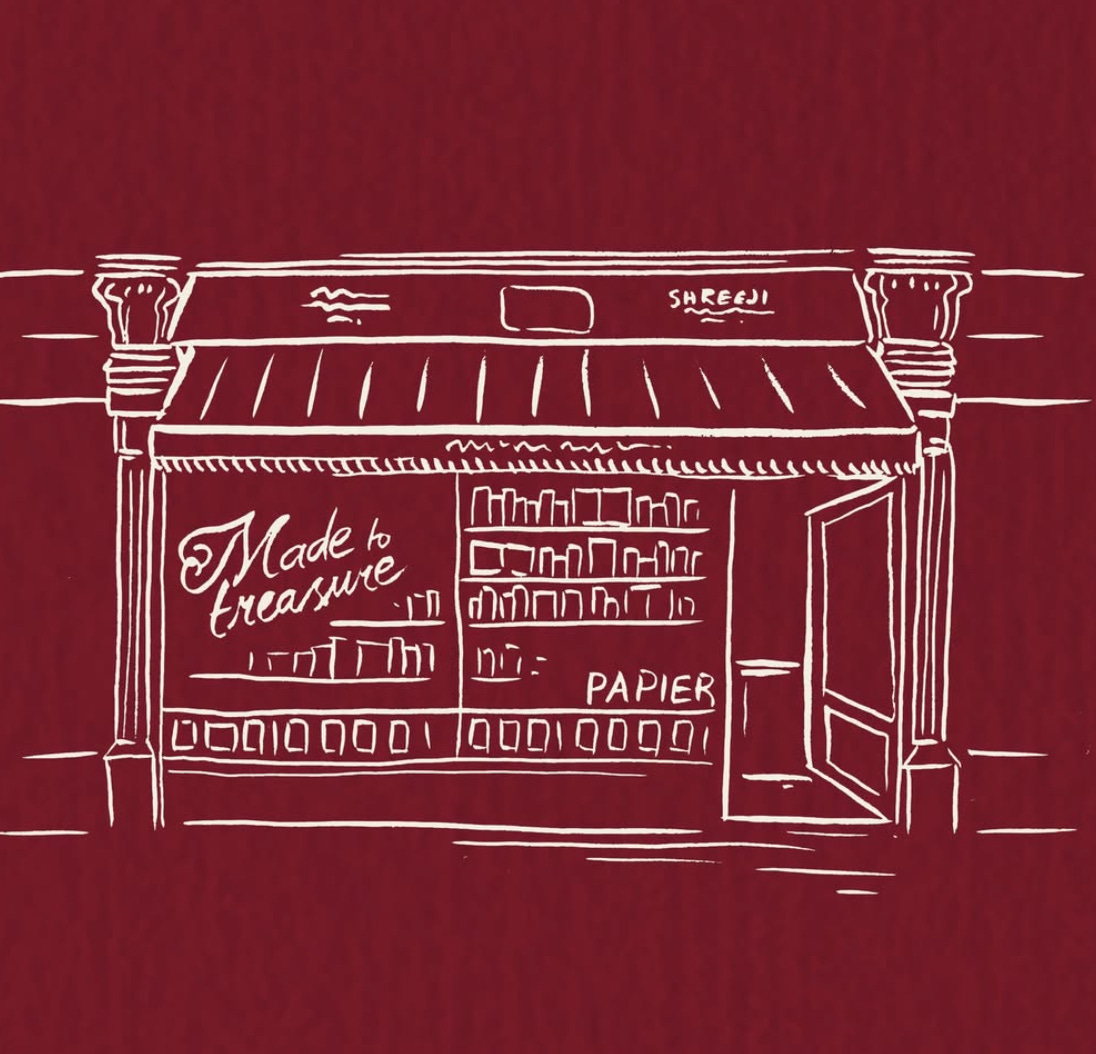
Pop-ups work much harder when the setting matches the story. Shreeji already carries Papier’s cultural shorthand; Tesoro the collection for the season, gifting and rituals gave us sharp guardrails and a clear identity. When you try to communicate too many messages or ask people to engage with too many elements, your core idea gets diluted.
2. Be honest about your KPIs
The win isn’t “did we smash sales?” It’s awareness, amplification, sentiment, PR secured, relationships built. Those are the metrics that make a pop-up worth the effort.
3. Treat it as a campaign, not a side project
PR, influencer, email, partnerships, social, events – everything should orbit the space with consistent messaging. It’s a press moment, an influencer moment and a customer moment all at once, and you need to design both the environment and the channel plan with that in mind.
As Rosie from JACK Agency, behind tonnes of cool experiential says:
“Consider the campaign’s lifecycle from day one. Focus on amplification before, during and after: How will this live on your socials? What UGC can you create to cut through the noise and extend your reach?”
4. Design for participation, not just pictures
Nice shelves aren’t enough. People want to do something. For Papier, that meant games on tables, craft sessions, tastemaker workshops, seasonal prompts, puzzles and crosswords. You want people to actually use the space, not just take pictures in it. We had our lovely designer Aga drawing on playing cards for an event too (in awe of her talent!)
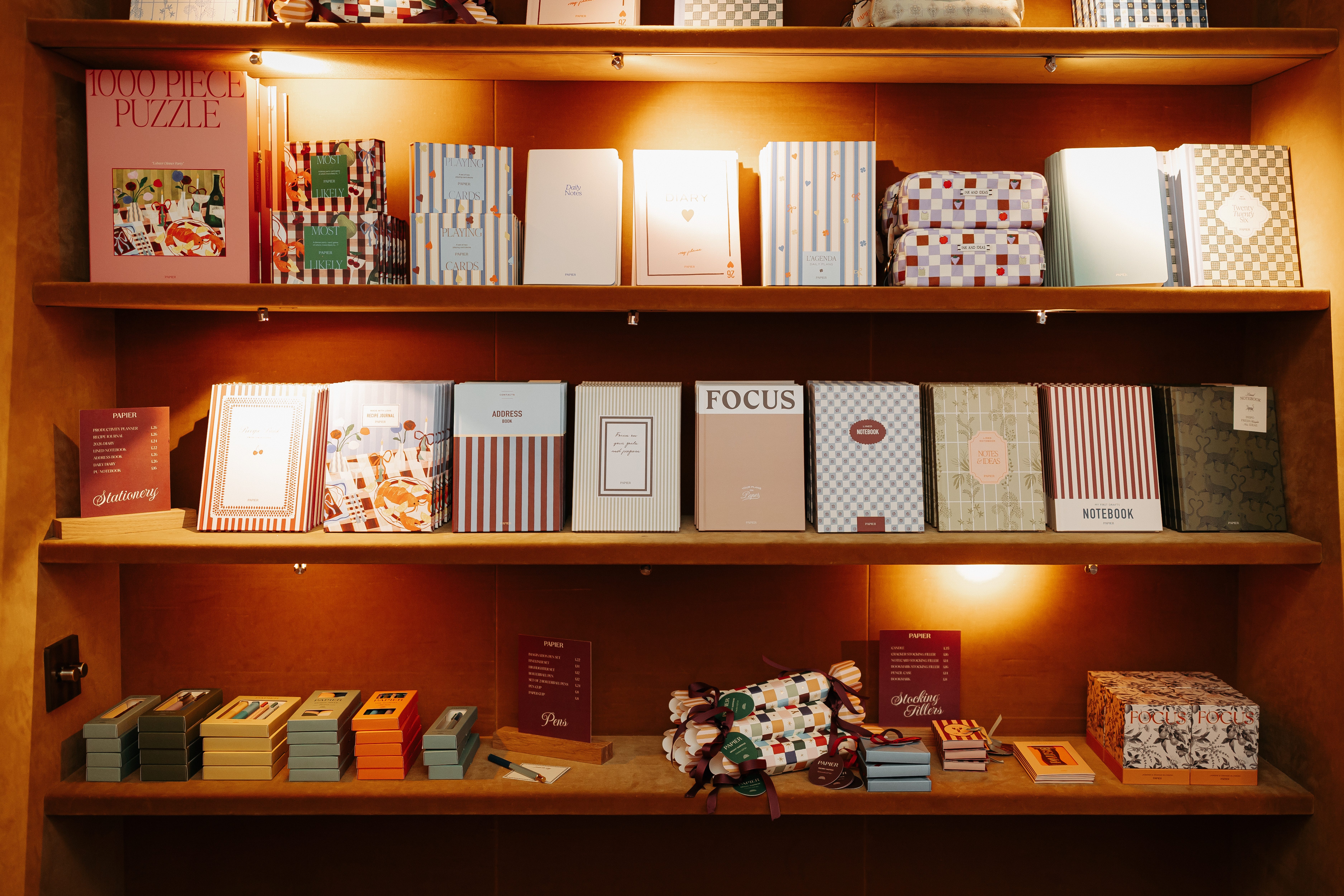
Image: Papier pop up shelves photography by Bizzy Arnott.
Rosie also reminded me that the real metric is emotional connection:
“Connecting with people emotionally. This can of course happen in a million different ways but as a starter for 10: making people feel at ease with friendly and clued up hosts that can cater for a range of guests needs. Making people laugh, feel understood, leaving them feeling enlightened as they have left the space learning something or making a new connection. Access to this is a step above sales and much stickier in peoples minds.”
5. Sweat the tiny things (they’re what people remember)
Branded coffee cups, pastries, napkins, signage, tablecloths, lighting, cushions (thank you to our friends at Colours of Arley for our stripes). These details seem small, but they’re the bits that get photographed, texted to a friend, or mentioned later. In experiential, the micro is the macro.


6. Use it to listen, partner and plan
Talk to customers – pop-ups are live qualitative research. Bring in brand friends to add depth and new audiences. And treat the whole thing as a low-risk test for future retail: neighbourhood, footfall, appetite.
The space might be temporary, but the learnings (and the content) stick around much longer.
A Few Pop-Up Myths Worth Busting
The glossy Instagram version of pop-ups makes them look unattainable – especially for smaller brands who imagine six-figure budgets, cavernous spaces and agency armies. Reality is far more democratic.
Myth 1: “You need an agency to pull this off.”
You don’t. Agencies can be brilliant – but they’re not essential. You do need taste, decisiveness and someone holding the creative thread from start to finish.
Myth 2: “Pop-ups are expensive.”
They can be, but they don’t have to be if you’re scrappy and resourceful. A thoughtful pop-up can cost less than a press dinner (especially a US press dinner) – and often the space is yours for longer. Small footprint, big resonance; it really depends on the space and the focus.
Myth 3: “If the space is small, the workload is small.”
Absolutely not. Pop-ups are team sports: creative, ops, PR, social, partnerships, production, founders, accounts, retail teams. The clearer and chicer the idea looks, the harder the team usually worked to make it feel effortless.
Myth 4: “It’s just a shop for a week.”
A pop-up is a multi-channel asset: press, influencers, customers, content, insight. A week-long shop can fuel months of storytelling.
In a year where everything feels optimised for speed and scale, there’s something powerful about a tiny space that exists for a brief moment, for a specific group of people, with a clear point of view. That’s the real power of a pop-up: not the queue outside, but the feeling people take with them when they leave – and the way that feeling quietly shapes what your brand becomes next.
And if you’re in London, you’re invited - do pop in. I’m genuinely so proud of this work – thanks for having me back for a minute Papier.
The Papier Festive Pop-Up in London looks so gorgeous Holly 🥹 I wish I was close to take a visit! I am working on a small pop up event for a client next Feb (their new brand launches in Jan)! Really loved the nod to merch being brand membership badges + how it’s so important to let people *do* something in the space, not just something that looks good…let it be used!
Super interesting post, basically nodding along in agreement throughout.
Including this bit, “Pop-ups as cool brand membership badges - I love this.”
Thanks for sharing and if I’m up in Marylebone I’m 100% popping into the popup